Renting in the Netherlands
Heating in Dutch rentals: radiators, underfloor heating, heat pumps and district heating
Understand heating and energy use in Dutch rentals, from radiator controls and underfloor heating to heat-pump efficiency, pressure checks and frost protection.
When a landlord mentions underfloor heating, you might picture a comfortable floor on a winter morning. But what heats it, whether the bedroom has its own controls and how long it takes to warm up are separate questions.
Recognising the equipment, understanding its controls and checking the bill will tell you more than simply learning the names of different heating systems.
First separate the heat source from the equipment in the room
Rental listings often mix two things: what produces the heat, and what releases it into the rooms.
The source may be a gas boiler (cv-ketel), a heat pump (warmtepomp), district heating (stadsverwarming) or a shared system for the building (blokverwarming). An all-electric heat pump and a hybrid heat pump working with a gas boiler also have different energy sources and fixed charges.
Inside the rooms, heat may come through radiators, underfloor heating (vloerverwarming) or convectors. Some convectors have fans, so check the airflow and operating noise.
You may also see standalone electric heaters that generate heat directly with an electric element. They work differently from heat pumps, which use electricity to move heat. Both use electricity, but their efficiency and running costs should not be treated as equivalent.
Underfloor heating does not establish whether a home uses electricity or gas. Water-based floors can use different heat sources. Electric underfloor heating, which uses heating cables and may serve an individual space, is a different system again. Milieu Centraal explains the different heating components.
For the relationship between insulation, energy ratings and heat pumps, see our rental energy-label guide. Here, we look at energy use, everyday controls and routine care after moving in.
Energy use depends on heat demand and how you supply it
First consider how much heat the home needs. Insulation, outdoor weather, the area you heat, your target temperature and how long you maintain it all matter. The heat source then determines how much gas or electricity is needed to supply that heat.
Radiators and water-based underfloor heating affect the water temperature the system can use. A suitable underfloor system can supply heat at lower water temperatures, as can suitably sized radiators. Lower heating-water temperatures can help a heat pump run more efficiently. There is no fixed savings ranking in which every floor beats every radiator: the building, heat source, emitters and controls need to work together.
Heat pumps use electricity to transfer heat from their surroundings; Milieu Centraal explains how this works. Their seasonal coefficient of performance, SCOP, is heat output over a heating season divided by electricity used. It has no unit: a higher value means more heat per kWh of electricity.
A study published in 2026 estimated the following average space-heating SCOP for groups of homes with all-electric heat pumps and different emitters.
Radiators onlyAll-electric heat pump
3.2 SCOP
Radiators + underfloor heatingAll-electric heat pump
3.6 SCOP
Underfloor heating onlyAll-electric heat pump
3.8 SCOP
Common linear scale: 0–4 SCOP. Higher means more heat per unit of electricity.
These estimates use smart-meter readings and home/installation data. Around 250 all-electric homes had complete data; each emitter group is smaller, and the figure does not give individual group sizes. The study covers owner-occupied homes and is not representative of all Dutch housing or rental homes.
The groups contain different homes, so the chart does not tell you what you would save by replacing radiators with underfloor heating, or predict your annual consumption or bill. It does show why it is worth checking whether the home’s emitters suit low water temperatures.
What does the knob beside a radiator control?
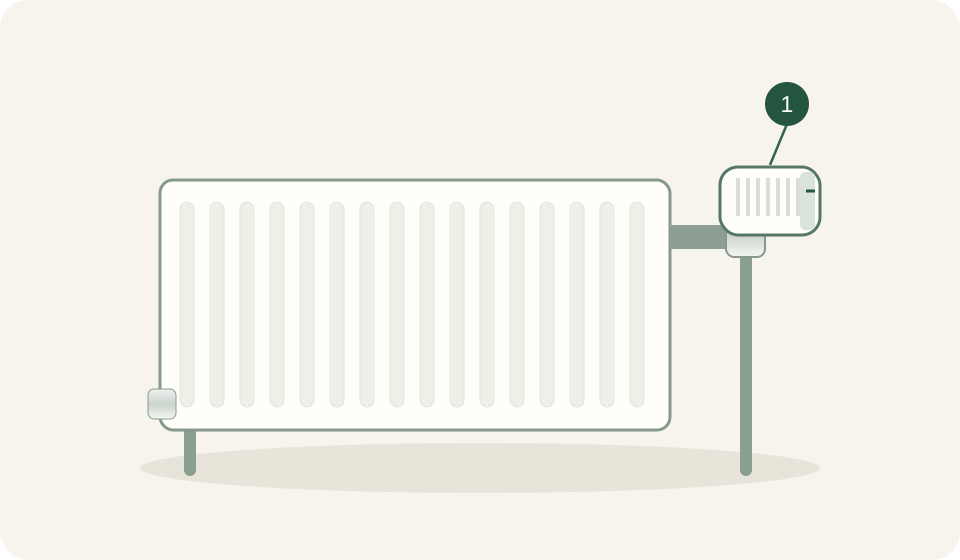
A radiator knob controls the passage of heating water through that radiator, but two common types work differently.
A manual valve stays at the opening you choose; it does not sense when the room is warm enough. A thermostatic valve responds to the temperature near its sensor and adjusts the water flow, reducing heat as the room approaches the setting.
Knobs marked 1–5 are commonly thermostatic. The numbers represent target temperature ranges rather than power levels like those on a fan. Milieu Centraal gives setting 3 as roughly 20°C, but the model, mounting position and surrounding airflow affect the result. Check the equipment’s instructions.
Turning from 3 to 5 generally asks for a warmer room; it does not select a fixed fast-heating mode. Keep furniture and long curtains clear of the radiator and its sensing head so that air can circulate.
If a bedroom stays cold with its valve turned up, look at the central controls too. In a system where the living-room thermostat decides when the boiler supplies heat, reaching the living-room target may stop heating elsewhere. An ordinary thermostatic radiator valve usually cannot ask the boiler to restart on its own. An open valve still needs a supply of hot water.
Ask how the wall thermostat and radiator controls work together. Do not arbitrarily restrict radiators in the room containing the central thermostat without understanding the system design. Milieu Centraal’s thermostat and radiator-valve guide explains these interactions.
Can a smart radiator head provide remote control and schedules?
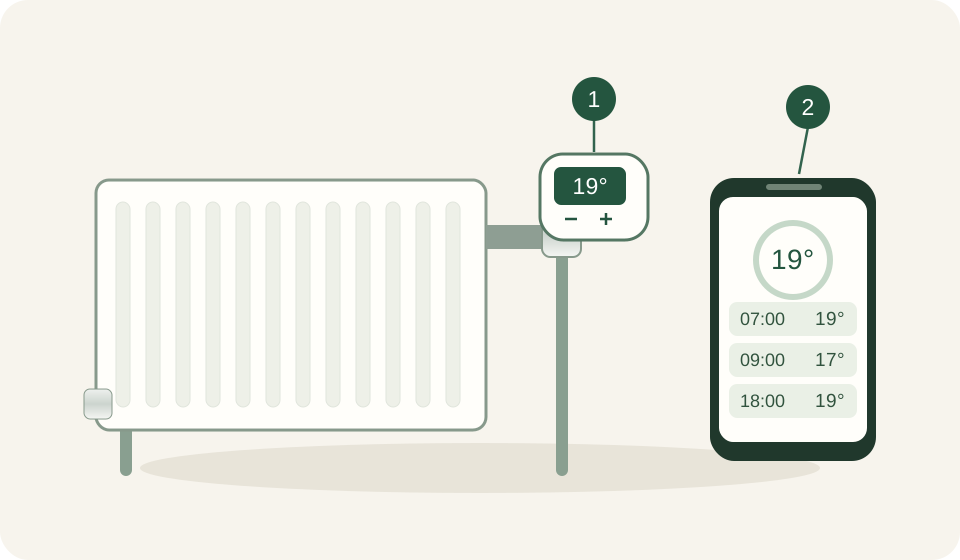
Yes. A compatible smart radiator thermostat can let you change a target temperature by phone or set different temperatures at different times. A study used during the working day could have one schedule, while a bedroom follows another.
Before buying, establish what it controls: only this radiator’s valve, or also a compatible central controller that can request heat from the boiler? If it only operates the valve, turning up a target in the app will not heat cold water when the source is off.
Check compatibility with the existing valve body, any required adapter or bridge, manual operation and any extra charges for remote features. Controls intended for a gas boiler are not automatically suitable for a heat pump.
In a rental, check the landlord’s and equipment’s requirements and retain the original head. Replacing the external control head is different from replacing the entire valve body connected to the water pipes. Valve-body, wiring or central-control changes belong with an appropriate installer.
Smart controls offer convenience and can make schedules easier to follow. Savings still depend on your previous habits and settings; an already well-used timer may leave little extra to save. See Milieu Centraal’s smart-thermostat guidance.
The row of underfloor pipes distributes water between circuits
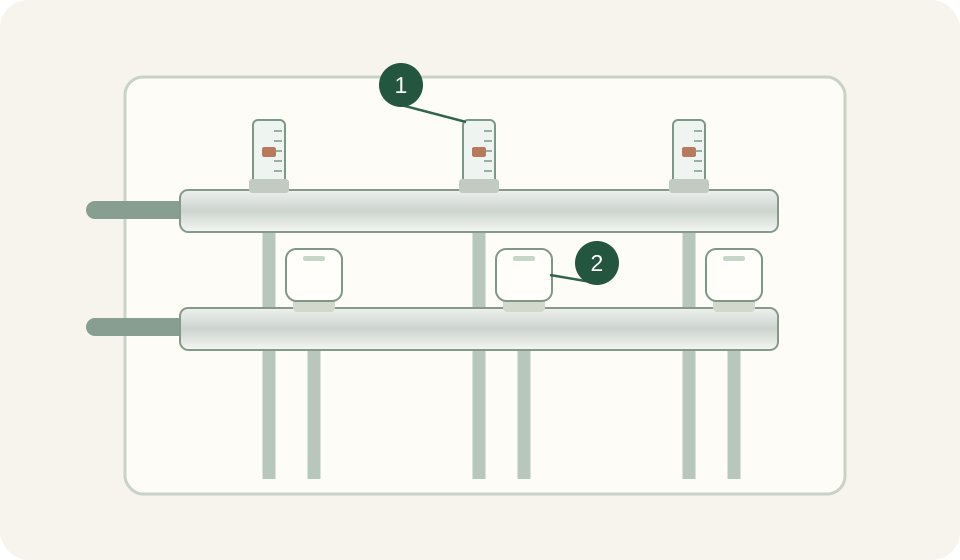
Water-based underfloor heating often has a manifold, or vloerverwarmingsverdeler, in a cupboard or utility space. Horizontal headers connect to several smaller pipes running into the floor. Some models have transparent flow meters, hand controls or electric actuator heads.
The manifold distributes heating water between circuits and collects it again after it passes through the floor. Flow through a circuit affects the heat delivered to that area, but one circuit does not necessarily mean one room. A large living room may use several circuits.
Two functions are worth separating:
- Hydraulic balancing allocates flow according to factors such as circuit length and heating demand, helping avoid one area receiving too much heat while another gets too little.
- Everyday zone control uses room thermostats, a controller and suitable actuators to regulate heat by area. Several pipes alone do not prove that every room has an independent temperature setting.
The manifold therefore affects room warmth, but not every adjustment on it is an everyday heat control. Ask the landlord which circuits serve which areas and which thermostat you should normally use. If one area stays cold, ask the landlord or installer to check the flow and balance instead of turning every adjustment fully open.
Uponor’s manifold information explains circuit flow and balancing. Its room-control guidance illustrates the additional equipment for zoning, scheduling and remote control. These are manufacturer sources; use the instructions for your actual installation.
Allow time for an underfloor system to warm the floor
Radiators usually produce a noticeable change more quickly. Underfloor heating often needs to warm the floor structure first. Pipes embedded in a thick screed can take hours to warm up, and the floor continues releasing stored heat after the supply is reduced.
Not every floor responds at the same speed. Thin, dry systems may react faster, while the floor finish, insulation, starting temperature and water supply also affect the wait. Milieu Centraal’s underfloor-heating guide compares heavy screed and lighter dry systems. Warmup’s construction comparison also describes warm-up periods of hours for heavy floors. These examples explain the difference, not a guaranteed time for every home.
If you want a comfortable room at seven, a heavy underfloor system may need to start before seven. Some controllers let you specify when to reach a temperature and start early automatically. Others only begin heating at the scheduled time. Check which behaviour yours uses.
Slow underfloor systems and low-temperature heat-pump systems generally suit steadier settings, avoiding large temperature swings over short periods. Follow the system’s guidance and observed response when deciding whether and how far to lower the temperature at night. A radiator schedule may not transfer well, and “leaving it on all day is always cheapest” is not a universal rule.
Routine care: check pressure and understand frost protection
Pressure checks, top-ups and servicing
For a private, closed water-based heating system, check pressure a few times a year according to the actual equipment manual. As one model-specific example, the Remeha Avanta 24c/28c/35c manual recommends 1.5–2 bar. That is not a target for every home. With district or shared heating, ask the landlord or operator who manages pressure and filling; an electric resistance heater has no heating-water pressure to check.
Only top up if the manual and the landlord’s arrangements allow you to do so and you know the correct filling point. Let the system cool as instructed first. If bleeding is needed, follow the manual’s cooling instructions too: escaping water can still be hot. Recheck pressure afterwards and restore the prescribed operating or frost-protection mode. Ask for a demonstration if unsure; internal boiler or gas work belongs with a professional.
Repeated pressure loss, leaks or rust need a landlord or installer to investigate, rather than continual refilling. Keep radiators and convectors free of dust and leave airflow unobstructed. Arrange gas-boiler servicing through a CO-vrij-certified company at the interval specified for the equipment; there is no single annual interval for every boiler. Milieu Centraal’s maintenance guide explains these routine checks.
Check frost settings before a winter absence
Closing a valve does not itself freeze the water. The risk arises when water in the system falls below freezing, especially in exposed or unheated winter spaces. Many thermostatic radiator valves use a snowflake for frost protection, while a 0 position may mean full shutoff. Symbols and behaviour depend on the model: some heads have no zero position, and smart controls can have configurable frost or holiday settings. See the AFRISO/Gampper 323 N description and Danfoss Eco guidance.
A frost valve still needs hot water to be available, with the required power, heat source and controls working. It cannot guarantee protection for distant pipes. Likewise, the Avanta manual’s built-in boiler frost function protects the boiler, not the whole home. Before a winter absence, confirm the system’s frost or holiday settings and which energy supplies must stay available with the landlord or installer. Where freezing is a risk, use those prescribed settings; full shutoff is not a substitute for frost protection.
For underfloor heating, normal zone actuators may close circuits when heat is not needed. This does not mean every loop must remain open all winter. Use the intended room or zone controls, keep the established balancing settings and ask the installer how minimum flow and frost protection are maintained across the system.
Compare comfort, control and billing together
At a viewing, consider whether radiators limit furniture placement, whether underfloor heating has useful zone controls, whether fan-assisted equipment is too noisy for a bedroom and whether each regularly used room can reach the temperature you need.
Costs depend on the source and billing arrangement. With a private gas boiler or all-electric heat pump, you may pay an energy supplier yourself. District or shared heating may be billed by a heat supplier or settled through the landlord. Fixed heating, metering or equipment charges may apply alongside consumption. ACM explains heating bills.
Ask whether a monthly figure is an advance or the final actual charge. A year’s consumption and settlement are more useful than a monthly payment alone, although previous occupants, habits and prices affect those figures. Include them when estimating your living costs beyond rent.
Six questions to take to the viewing
- What supplies the space heating and domestic hot water? Is there still a gas connection?
- Can each room have its own temperature? Which controls can request heat from the source?
- Do the radiators have manual valves, thermostatic valves or smart controls?
- For underfloor heating, which circuits serve which areas, which thermostat should I use and how long does the system normally take to respond?
- Who bills me, which fixed charges apply, how are shared costs allocated and when is the annual settlement?
- Who maintains the system? Can I see the operating manual, recent servicing record and past year’s actual consumption?
Ask for a demonstration during the viewing. It is easier than guessing what an unfamiliar row of knobs does after moving in. You need to know which control serves each space and what change to expect when you adjust it.